Back-to-back summer bookings leave holiday let owners with hours, not days, between guests. That tight turnaround is exactly where holiday let fire safety slips, because the cleaning has to be done and the next family is already on its way. The good news is that the checks that matter most take only a few minutes, and you can build them straight into the changeover you already do.
Why peak season is the risky time
Most owners start the season with every intention of keeping on top of things. The gaps tend to appear a few weeks into continuous bookings, when turnaround cleaning takes priority over everything else and one changeover blurs into the next. A guest leaves, a new guest arrives, and the quick safety look-over quietly drops off the list. That is the moment a flat alarm or a blocked hallway carries over to the people staying next.
What guests actually do to a property
Holiday guests treat a property differently from a permanent tenant, and small things add up fast. The most common problems are easy to spot once you know to look for them.
- Blocked escape routes. Luggage, bikes and walking gear get left in hallways and stairwells. If your cleaner is not briefed to clear them, the obstruction stays for the next booking.
- Silenced smoke alarms. Cooking smoke sets an alarm off, a guest pulls the battery or covers the unit, and nobody puts it back before the next arrival.
- Wedged fire doors. Propping a fire door open in warm weather feels harmless, but a door that cannot close will not hold back smoke and heat when it counts.
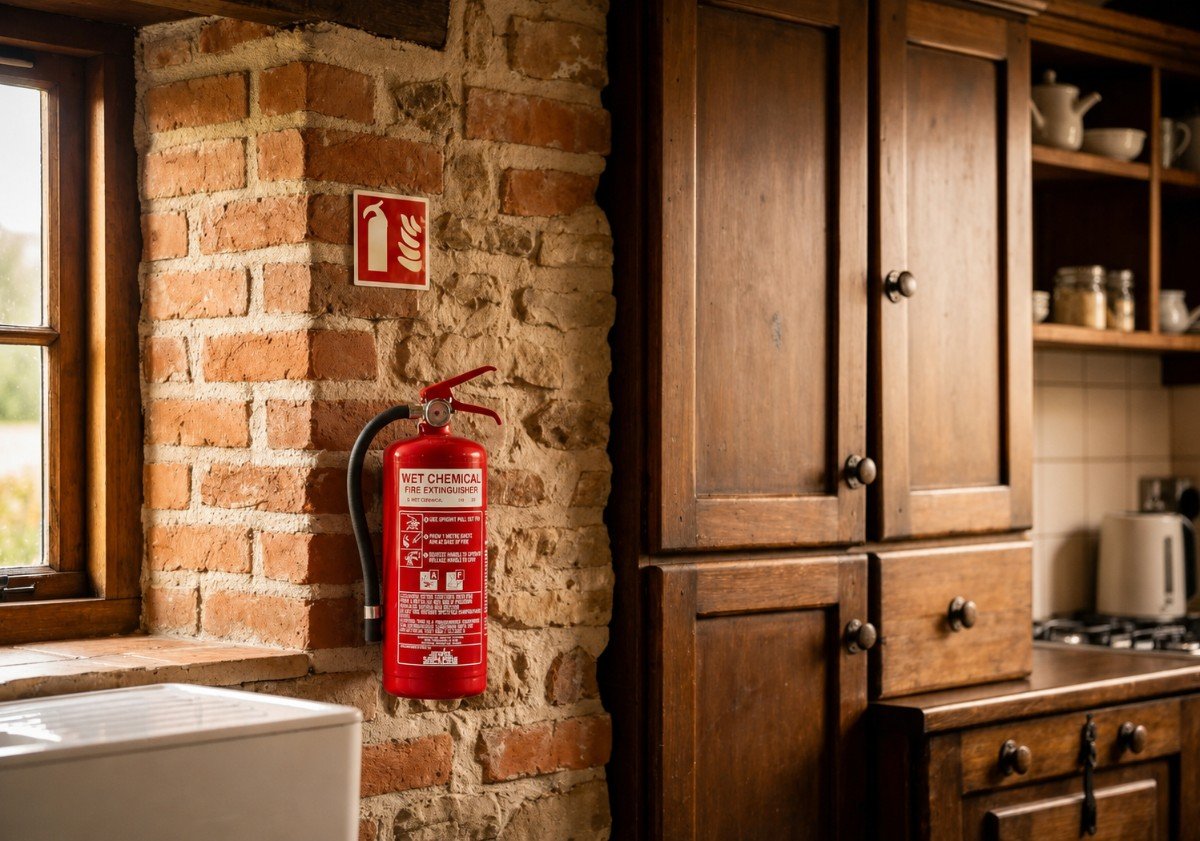
- Out-of-date extinguishers. A portable extinguisher that is past its service date may not work properly when someone reaches for it.
A turnaround fire safety checklist
This is built to slot into your existing cleaning routine. It adds about five minutes per changeover and means every guest arrives to a property that is genuinely safe, not just clean.
Between every booking
- Press the test button on every smoke and heat alarm, and replace any unit that does not sound.
- If there is a wood burner, gas hob or boiler, test the carbon monoxide alarm too.
- Check hallways, stairwells and external paths are clear of luggage, bikes and furniture.
- Confirm every fire door closes fully on its own, and remove anything wedging one open.
- Check fire extinguishers are in place, upright and showing pressure in the green zone.
- Test the emergency lighting and make sure the guest fire safety information is on display.
Your duty does not pause between bookings
As the owner, or the managing agent acting on your behalf, you are the person responsible for fire safety in the property. Because guests pay to stay there, a holiday let is not treated as an ordinary private home, and that duty applies the whole time the property is in use, not only when someone is staying.
You are expected to have a fire risk assessment carried out by a competent person, act on what it finds and keep it up to date. There is no fixed review date to memorise. The point is to revisit it whenever something changes: new furniture, a rearranged layout, a converted outbuilding or a different type of guest. If you use a management company, check your contract so you both know who holds the fire safety duty.
Fire safety measures need to stay maintained at all times the property is in use. If a fire breaks out and your alarms are dead or your assessment is out of date, the responsibility sits with you.
What to book before the busy weeks
Your own changeover checks sit alongside professional servicing, and the two are not the same job. Smoke and heat alarm systems need servicing on a regular schedule, and portable fire extinguishers are serviced once a year by a competent person. These cover different equipment, so they are booked separately.
Schedule that work before peak season rather than during it. If your property runs continuously through the summer, speak to your provider in spring and agree dates that fit around your turnaround days. A pre-season visit also leaves you with a fresh certificate to show your insurer before the busy weeks arrive.
Frequently asked questions
Do I need a fire risk assessment for a holiday let?
Yes. Because guests pay to stay, your property is not treated as an ordinary home, so you need an assessment by a competent person and you need to keep it up to date. This covers holiday cottages, glamping pods and other short-term rentals.
How often should I test the smoke alarms?
Press the test button on every smoke and heat alarm at each changeover. It takes seconds and confirms each one still works and has not been covered or switched off by the last guest.
Who is responsible for fire safety in a holiday let?
The owner, or the managing agent acting for them. If you use a management company, check your contract to confirm who holds the duty, because any enforcement notice is served on the responsible person.
Sources
Government guidance on fire safety in paying guest accommodation (gov.uk).