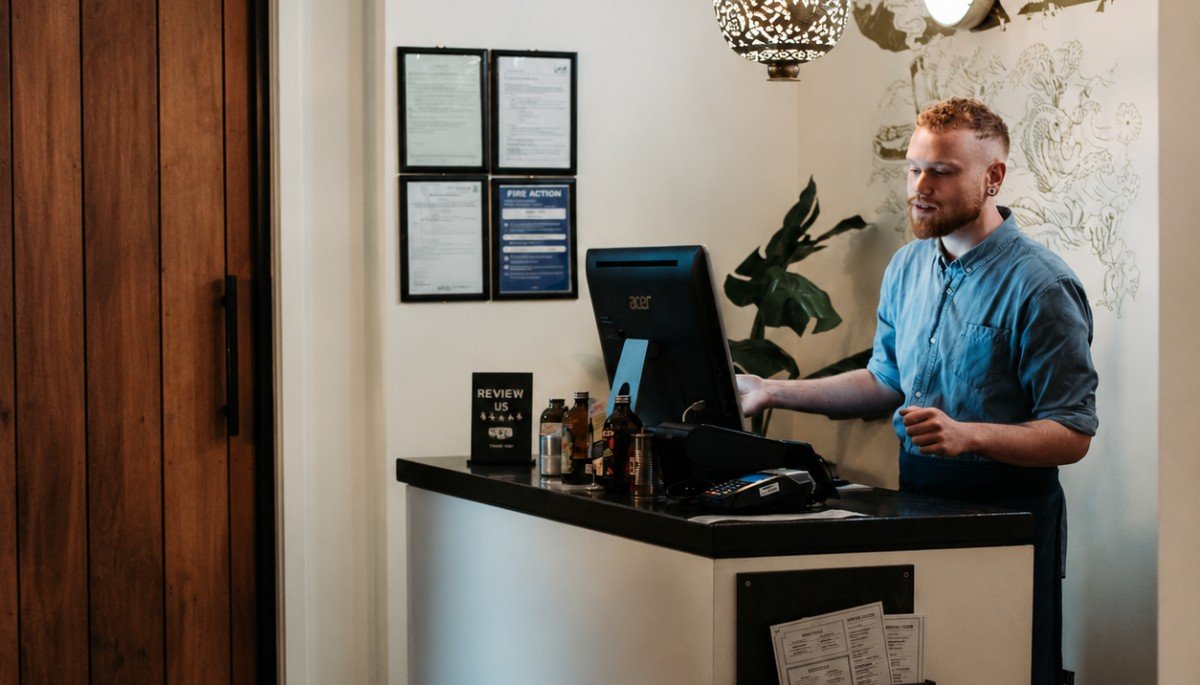
If your hospitality staff ever work on their own, lone worker safety is your responsibility, not theirs. A chef prepping before anyone else arrives, a housekeeper alone across several floors, a receptionist on a quiet night shift: each is a lone worker, and each needs a plan in case something goes wrong. This guide is for Cumbria hotels, pubs, guest houses and holiday lets.
What counts as lone working in hospitality?
Lone working simply means someone working without anyone else close by. It happens more often than people think: a chef in early to prep, a housekeeper cleaning an empty floor, a bar manager cashing up after closing, or one receptionist covering the night desk at a small hotel are all working alone, even if the building is full of guests.
Working alone is not against the law and you do not have to stop it. What you do have to do is think about what could go wrong and make sure the person can get help if it does. That is the whole idea behind lone worker safety.
Why it matters for your business
When someone is on their own and something happens, a slip, a fall, a medical scare or an aggressive customer, the question is simple: who would know, and how quickly could help reach them? In a busy team that sorts itself out in seconds. For a lone worker it might be a long time before anyone notices. Getting this right protects your staff, and it protects you if there is ever an incident.
What the law expects
You are expected to look at the risks of working alone and put sensible steps in place before that shift starts. There is no separate “lone worker law”. It is just your everyday duty to keep staff safe.
The biggest gap is usually communication. If a staff member locks up alone at 11pm, does anyone know they are still there, and what happens if they do not check in? In rural Cumbria, mobile signal can be patchy, so a phone alone is not always enough.
Where Cumbria hospitality businesses fall short
The most common gap is having no plan that actually covers working alone. Plenty of businesses have a general safety policy but have never sat down and thought through what happens when one person is on their own.
The second is communication. A lone worker in a remote pub kitchen or guest house may not get a mobile signal, so you need a back-up way for them to call for help and a way to know they are safe.
The third is training. Staff are often left to work alone with no preparation. They may not know how to handle a difficult customer, a medical emergency or a simple fall when nobody else is around. A short, focused course fixes that.
A practical checklist for hospitality employers
Lone worker safety checklist
- Spot every situation: list each time someone works alone, from early shifts and late lock-ups to housekeeping rounds.
- Set up check-ins: make sure someone always knows when a lone worker starts and finishes, and can raise the alarm if they do not report in.
- Test how they call for help: check staff can reach someone from every part of the premises. If signal is poor, add a landline, radio or personal safety device.
- Train everyone who works alone: cover handling difficult customers, emergencies, first aid awareness and the check-in system.
- Review when things change: update the plan for new premises, longer hours or seasonal staff.
Why training matters for seasonal hospitality in Cumbria
Summer brings a rush of visitors across the Lake District and the rest of Cumbria. Seasonal staff join fast and can find themselves working alone within days, on a breakfast shift at a B&B or a late clean-down at a restaurant. Without training they will not know your check-in routine, your emergency contacts, or how to handle a situation a more experienced colleague would deal with instinctively. A short session in their first week sorts that out and gives them the confidence to work safely on their own.
Your questions answered
Is it legal for one person to work alone in a hotel or pub?
Yes. Working alone is not against the law. Your job is to look at the risks and put sensible controls in place, such as check-ins, a reliable way to call for help, and training, rather than to stop lone working altogether.
What should we think about for a lone worker?
The main things are where and how they work, the task itself, whether they have the training to cope, and how they would get help in an emergency. If a staff member can always reach someone and someone would notice if they did not check in, you are in good shape.
How often should lone worker training be refreshed?
There is no fixed rule. A good habit is to refresh it whenever working patterns change, and to build lone worker training into the induction for every new intake. For seasonal teams in Cumbria, that means covering it at the start of the season.
Health and Safety Executive (HSE), guidance on protecting lone workers and managing the risks of working alone.